
Unlock Elite Rest: Advanced Biohacking Techniques for Sleep Optimization
In our relentless pursuit of peak performance and optimal health, one fundamental pillar often remains underestimated and underutilized: sleep. It’s not merely a period of inactivity; it’s a profound, restorative state crucial for cognitive function, emotional regulation, physical recovery, and metabolic health. Yet, in our 24/7 world, quality sleep has become an elusive luxury for many. While basic sleep hygiene advice abounds, truly optimizing sleep to unlock its full potential requires a more sophisticated approach. This is where advanced biohacking comes into play – leveraging science, technology, and intentional lifestyle adjustments to finely tune your body’s natural sleep mechanisms.
For the health-conscious adult seeking to transcend mere adequacy and achieve truly restorative, deep sleep, biohacking offers a powerful toolkit. Forget simply “getting eight hours”; we’re talking about enhancing sleep architecture, boosting recovery markers, and waking up feeling genuinely rejuvenated and ready to conquer the day. Prepare to delve into cutting-edge strategies that go beyond the obvious, transforming your nights and, consequently, your days.
Mastering Your Sleep Sanctuary: Beyond Basic Blackout
While the advice to make your bedroom dark and quiet is foundational, advanced sleep biohackers take environmental control to an entirely new level. Your sleep environment isn’t just about aesthetics; it’s a complex ecosystem that can either support or hinder your journey to optimal rest.
- Precision Temperature Control: Optimal sleep occurs in a cool environment. The ideal range is typically between 60-67°F (15-19°C). Advanced systems like the ChiliPad or Ooler hydro-powered mattress pads allow you to precisely regulate the temperature directly under your body, counteracting ambient room temperature fluctuations and actively cooling you to promote deeper sleep stages. Some smart thermostats also learn your sleep schedule and adjust accordingly.
- EMF Mitigation: Electromagnetic fields (EMFs) emitted by Wi-Fi routers, cell phones, smart devices, and even electrical wiring can disrupt cellular function and melatonin production. For advanced biohackers, reducing EMF exposure in the bedroom is critical. This involves unplugging all non-essential electronics, placing your phone on airplane mode (or outside the bedroom), and considering a hardwired internet connection. Some even employ EMF-shielding paint or fabric in their sleep zone.
- Superior Air Quality: We breathe thousands of liters of air each night. Poor air quality (high CO2, VOCs, allergens) can significantly impair sleep. Invest in a high-efficiency particulate air (HEPA) filter and activated carbon air purifier to remove irritants. Consider a CO2 monitor to ensure adequate ventilation; if levels are consistently high, opening a window or improving airflow becomes crucial. Specific plants like snake plants can also help purify the air, but an air purifier is more effective for comprehensive filtration.
- Sonic Purity: Beyond mere quiet, advanced users employ specific sound environments. While white noise is common, pink noise (which is more balanced across frequencies and mimics natural sounds like rainfall or a heartbeat) is often preferred for its ability to promote deeper, more stable sleep. Explore dedicated pink noise generators or apps, and consider acoustic paneling if external noise is a significant issue.
Nutritional Nuances & Supplemental Sophistication for Sleep
What you consume, and more importantly, when you consume it, profoundly impacts your body’s ability to transition into and maintain restorative sleep. Advanced biohacking for sleep involves a meticulous approach to diet and supplementation.
- Strategic Macro Timing: Avoid heavy meals at least 3-4 hours before bed. However, a small, strategically timed snack can be beneficial for some. Focus on a balance of complex carbohydrates and a small amount of protein, which can aid in serotonin and melatonin production. Examples include a banana with almond butter or a small bowl of oatmeal.
- Targeted Micronutrient Support: Beyond general nutrition, specific micronutrients play critical roles in sleep pathways.
- Magnesium L-Threonate: Unlike other forms of magnesium, L-Threonate is known for its ability to cross the blood-brain barrier, making it particularly effective for neurological benefits, including sleep, memory, and cognitive function.
- Apigenin: Found in chamomile, this flavonoid has anxiolytic (anti-anxiety) and sedative properties, acting as a natural mild sedative by binding to GABA receptors in the brain.
- L-Theanine: An amino acid found in green tea, L-Theanine promotes relaxation without sedation, making it excellent for reducing pre-sleep anxiety and improving sleep quality.
- Tart Cherry Extract: A natural source of melatonin and tryptophan, studies suggest it can improve sleep quality and duration.
- Glycine: This amino acid can lower core body temperature and promote quicker sleep onset and deeper sleep.
- Gut-Brain Axis Optimization: The gut is often called the “second brain,” and its health directly impacts neurotransmitter production essential for sleep. Incorporate fermented foods (kimchi, sauerkraut, kefir) and consider a high-quality probiotic supplement. A diverse and healthy gut microbiome contributes to optimal serotonin production, a precursor to melatonin.
- Eliminating Hidden Sleep Disruptors: Beyond obvious culprits like caffeine and alcohol, consider their timing. Caffeine’s half-life can be up to 6 hours, meaning a 3 PM coffee could still be affecting you at 9 PM. While alcohol might initially make you feel drowsy, it severely fragments sleep architecture, particularly REM sleep, leading to reduced overall quality. Aim to cut off alcohol at least 3-4 hours before bed.
Hacking Your Circadian Rhythm with Light and Darkness
Your circadian rhythm, your internal 24-hour clock, is primarily regulated by light exposure. Advanced biohackers meticulously manage their light environment to strengthen this rhythm and optimize sleep-wake cycles.
- Strategic Morning Light Exposure: Immediately upon waking, seek out natural sunlight. Aim for 10-30 minutes of direct outdoor light exposure, ideally within the first hour of waking. This signals to your body that the day has begun, setting your circadian rhythm effectively and boosting cortisol levels for healthy daytime energy, which then naturally dips at night. If natural light isn’t available, a high-quality “dawn simulator” light box can mimic this effect.
- Blue Light Blockage: The blue light emitted by screens (phones, tablets, computers, TVs) and modern LED lighting suppresses melatonin production, signaling to your brain that it’s still daytime.
- High-Quality Blue Light Blocking Glasses: These are essential for evenings, especially after sunset. Look for glasses that block 99%+ of blue and green light (wavelengths 450-550nm), as green light can also interfere with melatonin.
- Software Solutions: Utilize built-in features like Night Shift (Apple) or Night Light (Windows/Android), but understand these are often insufficient as they don’t block enough blue light and zero green light. Consider third-party software like F.lux or Iris for more aggressive filtering.
- Smart Lighting: Replace bedroom lights with bulbs that can shift to amber/red tones in the evening, eliminating blue light.
- Absolute Darkness for Sleep: Even small amounts of light can disrupt sleep. Ensure your bedroom is pitch black. Use blackout curtains or blinds that completely block all external light. If any light persists (e.g., from power indicators on electronics), cover them. A high-quality, comfortable sleep mask is a simple yet incredibly effective tool for achieving total darkness, especially when traveling.
- Red Light Therapy Pre-Sleep: Some advanced biohackers use low-level red light therapy (around 660nm to 850nm) in the evenings. Unlike blue light, red light does not suppress melatonin and may even promote relaxation and improve mitochondrial function, potentially aiding sleep quality. A brief session (5-10 minutes) with a red light panel can be incorporated into your evening routine.
Data-Driven Deep Sleep: Wearables and Biofeedback
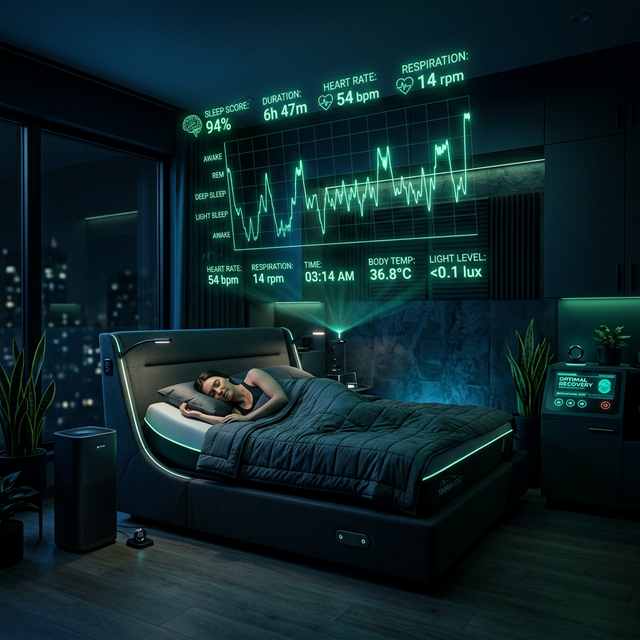
The era of “guessing” about your sleep quality is over. Advanced biohackers leverage wearable technology and biofeedback tools to gain objective insights into their sleep patterns, enabling precise adjustments and optimization.
- Advanced Sleep Trackers: Devices like the Oura Ring, Whoop Strap, and advanced smartwatches (e.g., Apple Watch, Garmin Fenix) don’t just count hours. They track heart rate variability (HRV), resting heart rate, body temperature, respiratory rate, and movement to estimate time spent in different sleep stages (light, deep, REM).
- Actionable Insights: Don’t just look at the scores. Analyze trends. Is your HRV consistently lower after a late-night workout or alcohol? Are you getting enough deep sleep? Use this data to identify patterns and inform your interventions. For example, if your deep sleep is consistently low, you might focus more on magnesium, colder sleep temperatures, or earlier meal cut-offs.
- Recovery Metrics: Pay attention to your recovery score, often derived from HRV. A low recovery score indicates your body needs more rest and repair, signaling a need for an earlier bedtime or reduced training intensity.
- Neurofeedback & Biofeedback Tools: These techniques train your brain to achieve desired states.
- EEG Headbands (e.g., Muse): These devices provide real-time audio feedback on your brain activity, guiding you into a calmer, more meditative state conducive to sleep. Regular pre-sleep meditation using such tools can train your brain to switch off more effectively.
- Heart Rate Variability (HRV) Biofeedback: Apps and devices can guide you through breathing exercises to optimize your HRV, promoting parasympathetic nervous system activity (rest and digest) and preparing your body for sleep.
- Binaural Beats and Solfeggio Frequencies: While not universally accepted as definitive science, many individuals report benefits from listening to specific audio frequencies designed to induce brainwave states associated with relaxation and sleep (e.g., delta waves for deep sleep). Experiment with different frequencies and find what resonates with you as part of your wind-down routine.
Conclusion: Your Journey to Elite Sleep Begins Now
Optimizing sleep through advanced biohacking is not a one-size-fits-all solution, nor is it a quick fix. It’s a journey of experimentation, data analysis, and consistent application of scientifically backed strategies. By meticulously controlling your environment, fine-tuning your nutrition, manipulating light exposure, and leveraging cutting-edge technology, you can move beyond simply “getting by” and truly unlock the profound restorative power of elite sleep.
Remember to introduce changes gradually, observe their effects, and listen to your body’s unique responses. Your commitment to these advanced techniques will not only lead to deeper, more rejuvenating sleep but will ripple out into every aspect of your life – enhancing your energy, focus, mood, and overall well-being. The future of health lies in personalized optimization, and advanced sleep biohacking is your passport to a more vibrant, high-performing you. Start your journey tonight.