
Unlock Your Metabolic Potential: A Deep Dive into Continuous Glucose Monitors for Non-Diabetics
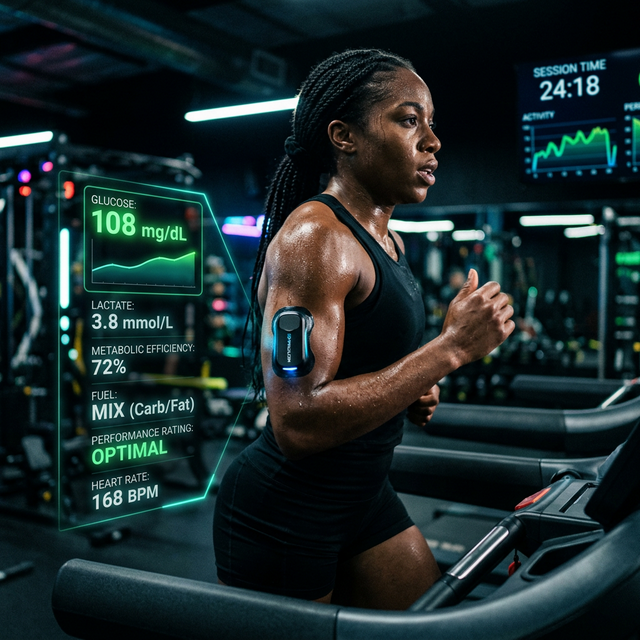
For too long, understanding our metabolic health has been like navigating a dark room with only a flickering candle. We’ve relied on periodic lab tests, vague dietary guidelines, and general advice that often failed to account for our unique physiology. But what if you could have a constant, real-time window into how your body responds to everything you eat, every workout, and every moment of stress? Enter the world of Continuous Glucose Monitors (CGMs) – a game-changer not just for individuals managing diabetes, but increasingly, for health-conscious non-diabetics seeking to optimize their well-being, energy levels, and long-term health.
Once considered a niche medical device, CGMs are now emerging as a powerful tool for biohackers, athletes, and anyone committed to proactive health. By providing minute-by-minute glucose data, they offer unparalleled insights into how your lifestyle choices directly impact your blood sugar, and by extension, your energy, mood, and inflammation. But with several excellent options available, how do you choose the right CGM for your needs as a non-diabetic? This comprehensive guide will compare the leading continuous glucose monitors, helping you make an informed decision to elevate your metabolic health journey.
What Exactly is a CGM and Why Should Non-Diabetics Care?
A Continuous Glucose Monitor is a small, wearable device that tracks your glucose levels throughout the day and night. Unlike traditional finger-prick tests that provide a single snapshot in time, a CGM gives you a continuous stream of data, typically every 1 to 5 minutes. The device usually consists of a small sensor, applied to the back of your upper arm or abdomen, which has a tiny filament that painlessly sits just beneath the skin. This filament measures glucose in your interstitial fluid – the fluid surrounding your cells – which closely correlates with blood glucose levels.
So, why is this relevant for non-diabetics? While diabetes involves pathologically high blood glucose, even in healthy individuals, glucose levels fluctuate significantly throughout the day based on food intake, physical activity, stress, and sleep. These fluctuations, particularly frequent or pronounced “spikes” and “crashes,” can impact your:
- Energy Levels: Rollercoaster glucose leads to energy slumps and brain fog.
- Weight Management: High glucose spikes trigger insulin release, which can promote fat storage and hinder fat burning.
- Cravings & Hunger: Glucose crashes can lead to intense cravings for sugary foods.
- Inflammation & Oxidative Stress: Chronic glucose dysregulation contributes to systemic inflammation, a root cause of many chronic diseases.
- Sleep Quality: Eating certain foods close to bedtime can elevate glucose, impacting sleep architecture.
- Workout Performance: Understanding glucose response helps optimize fuel for exercise and recovery.
- Personalized Nutrition: What’s “healthy” for one person might cause a significant glucose spike for another. A CGM reveals your unique responses.
- Early Detection of Metabolic Dysfunction: Consistent patterns of elevated glucose or insulin resistance, even without full-blown diabetes, can be identified early, allowing for preventive interventions.
In essence, a CGM empowers non-diabetics with actionable data to fine-tune their diet, exercise, and lifestyle for optimal metabolic health, preventing future issues and improving current vitality.
Key Players in the CGM Market for Non-Diabetics
The market for CGMs is rapidly evolving, with a few dominant players alongside innovative platforms built on their technology. For non-diabetics, the primary hardware options usually come down to Abbott’s FreeStyle Libre family and Dexcom’s series.
Abbott FreeStyle Libre (Libre 2 & Libre 3)
- How it works: The FreeStyle Libre system involves a small, disposable sensor worn on the back of the upper arm, typically for 14 days.
- FreeStyle Libre 2: This version requires you to “scan” the sensor with your smartphone (or a dedicated reader) to get a glucose reading. It offers optional alarms for high or low glucose.
- FreeStyle Libre 3: A significant upgrade, the Libre 3 is Abbott’s smallest and thinnest sensor. It provides real-time, minute-by-minute glucose readings directly to your smartphone automatically, without needing to scan. It also features customizable alarms.
- Pros for Non-Diabetics: Generally more affordable than Dexcom, user-friendly application, discreet design. The Libre 3’s real-time streaming makes it highly competitive. Often easier to obtain, sometimes even over-the-counter in some regions (though a prescription is common for non-diabetics).
- Cons: Libre 2’s scanning requirement can be less convenient than continuous streaming. Accuracy is excellent but may vary slightly compared to Dexcom for some users.
Dexcom (G6 & G7)
- How it works: Dexcom sensors are typically worn on the abdomen (or back of the upper arm for G7) and wirelessly transmit glucose data to a receiver or smartphone.
- Dexcom G6: Provides real-time glucose readings every five minutes without scanning. Known for its high accuracy and predictive alerts for highs and lows. The sensor lasts for 10 days, and it requires a separate transmitter that lasts for 90 days.
- Dexcom G7: The latest iteration, the G7 is a smaller, all-in-one disposable sensor and transmitter. It has a faster warm-up time (30 minutes vs. 2 hours for G6) and lasts for 10 days. It also offers enhanced accuracy and improved connectivity.
- Pros for Non-Diabetics: Industry-leading accuracy (often cited with lower MARD values), true continuous real-time streaming with no scanning required, highly reliable alerts, and excellent data sharing capabilities. The G7’s compact size and faster warm-up are big improvements.
- Cons: Typically more expensive than FreeStyle Libre. The application process can be slightly more involved for some.
Integrated Platforms (e.g., Levels, NutriSense, Signos)
These companies don’t manufacture their own hardware but provide comprehensive services built around existing CGMs (usually FreeStyle Libre or Dexcom). They offer:
- CGM Access: Often facilitate obtaining a prescription and supplying the sensors.
- Proprietary Apps: Advanced apps that interpret your glucose data, offering more user-friendly insights, personalized scores (e.g., “Metabolic Score”), and correlations with food logs and activity.
- Coaching & Community: Many include access to registered dietitians or health coaches, educational content, and community forums.
- Pros: Excellent educational resources, actionable insights, personalized coaching, streamlined access to CGMs.
- Cons: Significantly higher cost due to the bundled services. May not be necessary for those who prefer to self-interpret data.
Comparing Features: Accuracy, Application, App Experience, and Cost
When choosing a CGM as a non-diabetic, several factors come into play beyond just the brand name:
Accuracy (MARD)
The industry standard for measuring CGM accuracy is the Mean Absolute Relative Difference (MARD). A lower MARD percentage indicates higher accuracy. For context, typical MARD values range from 8-10% for CGMs. Dexcom G6 and G7 generally boast MARD values in the 8-9% range, making them highly reliable. The FreeStyle Libre 3 is very competitive, often in the 9% range, while older Libre models might be slightly higher. For non-diabetics, extreme clinical precision isn’t always the primary goal; rather, consistent and reliable trends are key. All modern CGMs offer sufficient accuracy for lifestyle optimization.
Application & Wearability
- Sensor Size: Libre 3 and Dexcom G7 are remarkably small and discreet, making them easy to forget you’re wearing.
- Application Process: All current CGMs use simple, almost painless applicator devices. The process takes seconds.
- Wear Time: Most sensors last for 10-14 days, providing extended data without frequent changes.
- Water Resistance: All major brands are water-resistant, allowing for showering, swimming, and exercise without removal.
App Experience & Data Insights
This is where the user experience often differentiates devices. All major brands have companion smartphone apps:
- Real-Time vs. Scan: Dexcom G6/G7 and Libre 3 offer continuous real-time streaming. Libre 2 requires a scan. Real-time is generally preferred for immediate feedback.
- Clarity of Data: Look for apps that present glucose trends clearly, with customizable ranges and easy-to-understand graphs.
- Food & Activity Logging: The ability to easily log meals, exercise, and medication within the app (or integrate with other apps) is crucial for correlating lifestyle with glucose response.
- Actionable Insights: While core apps show data, platforms like Levels and NutriSense excel at translating raw data into actionable advice, personalized “scores,” and recommendations.
- Alerts: Customizable high and low glucose alerts are standard, which can be useful even for non-diabetics to understand extreme responses.
Cost & Accessibility
This is often the biggest hurdle for non-diabetics.
- Prescription: In many countries, CGMs still require a prescription, even for non-diabetics. Telehealth services or integrated platforms (like Levels) can help facilitate this.
- Insurance Coverage: Generally, insurance will not cover CGMs for non-diabetics, meaning out-of-pocket expenses.
- Per Sensor Cost: FreeStyle Libre sensors tend to be more affordable, often ranging from $70-$100 per 14-day sensor. Dexcom sensors (and their accompanying transmitters) are typically more expensive, potentially $100-$150+ for a 10-day sensor.
- Platform Costs: Bundled services like Levels or NutriSense can range from $199-$400+ per month, including the sensors and coaching. These are significantly higher but offer added value.
For a trial period, a FreeStyle Libre 2 or 3 is often the most cost-effective entry point for non-diabetics to test the waters.
Practical Tips for Maximizing Your CGM Experience (Even Without Diabetes)
Simply wearing a CGM isn’t enough; deriving meaningful insights requires active engagement. Here are practical tips for non-diabetics:
- Start with a Baseline: Don’t make drastic changes immediately. Wear the CGM for the first 3-5 days while maintaining your normal routine. This establishes your unique baseline glucose patterns.
- Log Everything: Meticulously log your meals (including portion sizes and ingredients), exercise (type, intensity, duration), sleep (hours, quality), and perceived stress levels. This context is vital for understanding your glucose responses.
- Focus on Trends, Not Just Numbers: A single high reading after a sugary treat isn’t the end of the world. Look for patterns: Do certain types of meals consistently cause large spikes? Does a morning workout improve your glucose response to breakfast?
- Experiment Strategically: Once you have a baseline, try controlled experiments. For example, eat the same meal two days in a row, but on one day, go for a 15-minute walk afterward. Observe the difference in your glucose curve.
- Prioritize Protein & Fiber: You’ll quickly notice how adding protein and fiber to a carbohydrate-rich meal can significantly blunt glucose spikes. Fiber also slows digestion, promoting stable glucose.
- Embrace “Movement as Medicine”: Even short walks post-meals can dramatically improve glucose clearance and reduce spikes. Your CGM will prove this to you visually.
- Don’t Obsess: While insightful, CGM data shouldn’t lead to anxiety or disordered eating. Use it as a tool for learning and empowerment, not a source of judgment. Some variability in glucose is normal. Aim for stability, not perfect flatness.
- Consult a Professional: Consider working with a registered dietitian, health coach, or doctor who understands CGM data for non-diabetics. They can help interpret complex patterns and provide personalized guidance.
- Hydration Matters: Dehydration can slightly elevate glucose readings. Ensure adequate water intake.
- Mind Stress & Sleep: Notice how poor sleep or high stress can elevate your fasting glucose or make you more sensitive to carbs. This reinforces the importance of holistic health.
Conclusion
The advent of continuous glucose monitors for non-diabetics represents a paradigm shift in personalized health and wellness. No longer are we guessing about our metabolic health; we can now see, in vivid detail, how our daily choices shape our internal physiology. Whether you’re an athlete optimizing performance, someone managing energy slumps, or simply a health-conscious individual aiming for longevity, a CGM offers an invaluable feedback loop.
Choosing between options like Abbott’s FreeStyle Libre and Dexcom’s G7, or opting for an integrated platform, largely depends on your budget, desired level of real-time detail, and whether you prefer self-interpretation or guided coaching. Regardless of your choice, the fundamental benefit remains: the power to understand your body better, make informed adjustments, and proactively steer your health towards greater vitality and metabolic resilience. Embrace this technology, listen to your body’s unique story, and unlock your full metabolic potential.